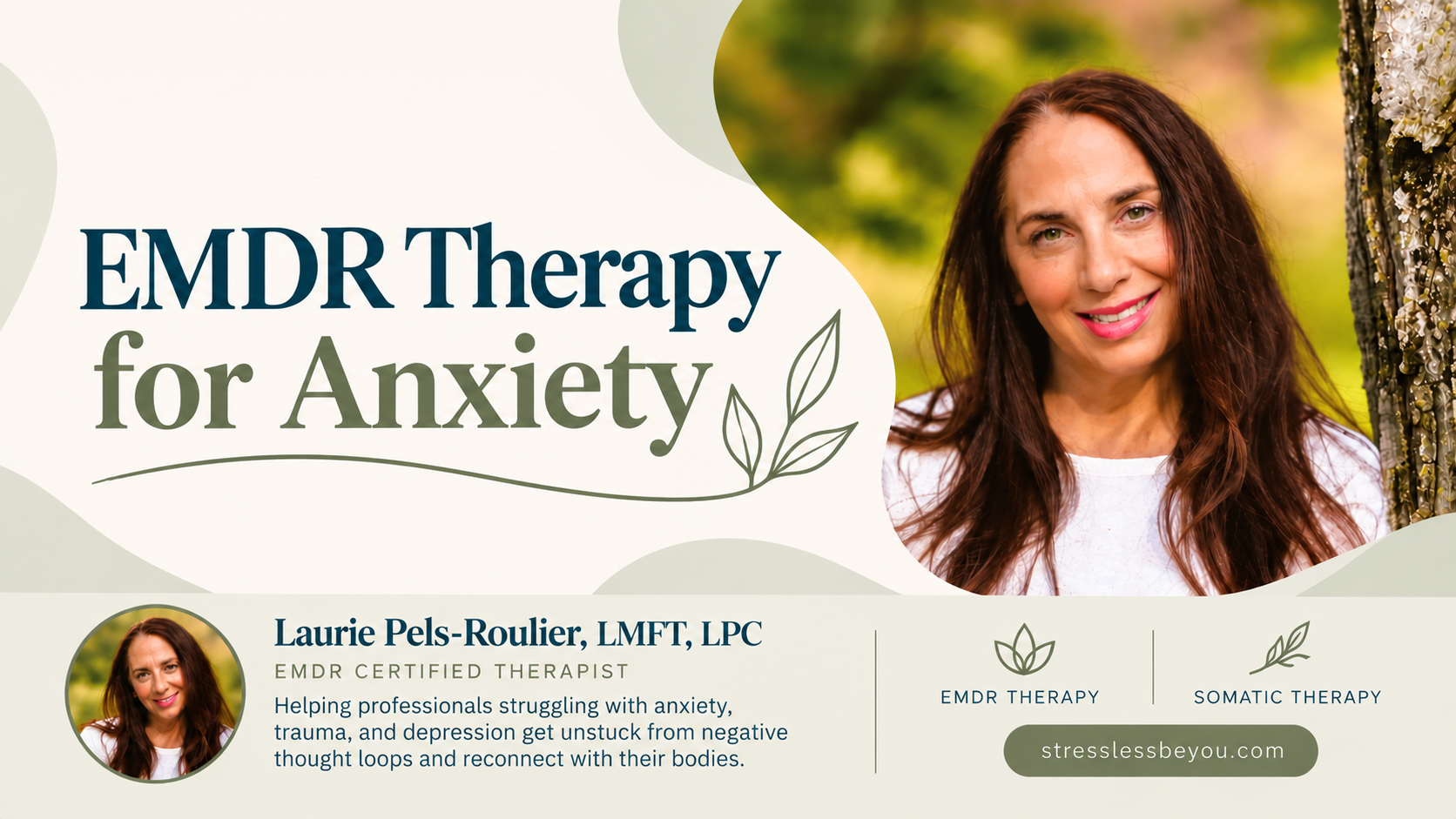
EMDR Therapy for Anxiety
When understanding your worry is not enough
Laurie Pels-Roulier, LMFT, LPC | EMDR Certified Therapist
You are meeting friends for dinner and chest feels tight. You have hung out with them all before. So what’s wrong? You have a text that has gone with no response. You think “I know they’re busy” but you can’t stop checking your phone.
If this sounds familiar, it may be helpful to discover what triggers your anxiety and what keeps it going. EMDR therapy may be useful, particularly when distressing experiences relate to current reactions. A thoughtful assessment helps you decide whether it fits your needs.
Anxiety can show up in different ways
Anxiety may involve persistent worry, tension, trouble concentrating, or an urge to avoid situations that feel threatening. For some people, it centers on particular fears. For others, uncertainty itself becomes difficult to tolerate. Even when you appear capable and composed, managing these reactions can take considerable effort.
As an EMDR therapist in Connecticut, my clients often find that their anxiety triggers are tied to feelings they have had in the past. An example is when they have experienced childhood neglect. They may feel extra anxiety expressing themselves to partners, friends, family due to fear of losing approval or love. They may find themselves overanalyzing conversations with friends or their partner. This can start a panic or anxiety cycle that is difficult to exit.
Anxiety is part of life. It is unavoidable. However, when it is persistent, interferes with work, relationships, sleep, or everyday choices, it deserves attention. A therapist can help clarify the kind of anxiety you are experiencing and consider contributing factors, including current stress, health concerns, and earlier experiences. [1]
When the past can show up as anxiety
An earlier experience can influence what you expect from a present situation. If parents, teachers or other caregivers were critical, for example, this may shape how you saw and continue to see yourself. You may continue to see yourself as “less smart”, for example, even if you have demonstrated achievement. In other words, your reality may completely differ from the old narrative. Yet, you have a difficult time fully believing it. Therefore, you may struggle to express yourself in front of others because you are stuck in the old narrative and you feel anxious.
These are only possibilities to explore, not assumptions. Anxiety does not always come from trauma, Your therapist should help you understand your story rather than make your situation fit it into a predetermined plot.
Where EMDR may fit
EMDR stands for Eye Movement Desensitization and Reprocessing. It is a structured therapeutic protocol best established for posttraumatic stress disorder. During reprocessing, a therapist guides attention to a selected memory while using bilateral stimulation or working memory tasks. The aim is to reduce the distress associated with that memory. [2]
Clinicians also use EMDR for some anxiety presentations, working with relevant past experiences, current triggers, and anticipated situations. Evidence varies by condition, so it is worth asking how the approach compares with treatments such as cognitive behavioral therapy, exposure based treatment, or medication for your particular concerns. [1, 3]
What change might look like
You may long to reach out to others and expand your social circle. However, the old story of “I don’t fit in” gets in the way. A possible goal may be that you finally give yourself permission to invite someone to a concert or event. You may finally decide to join that walking, running or hiking group.
These are just some ideas. Real change involves changes in anxiety symptoms, avoidance, and daily functioning. Sometimes finding some concrete examples just gives you and your therapist another way to measure progress.
Thinking about a consultation?
Some thoughts to consider in a consultation: ask if EMDR therapy might be a fit for you and your anxiety. Inquire about your therapist’s overall experience and training. Ask about their experience using EMDR for anxiety. Your therapist should explore if trauma could be a significant factor and if EMDR therapy is an appropriate choice for you. You should not come out of consultation with all the answers but with hope that you can find some. 😊
Taking the next step
You do not need to have the full explanation for your anxiety before reaching out. That is why you are reaching out in the first place. Give yourself some grace.
Together, you and a therapist can consider a plan that fits your symptoms and goals.
For more information about EMDR therapy, read EMDR Therapy in CT What to Expect Before During and After, A Complete Guide. For practical support between appointments, explore Self Care After an EMDR Session.
Learn more at stresslessbeyou.com
Sources and further reading
[1] National Institute of Mental Health — Anxiety Disorders
[2] VA National Center for PTSD — EMDR for PTSD
[3] EMDR International Association — EMDR Therapy and Anxiety

Laurie Pels-Roulier, LMFT, LPC
Licensed Marriage and Family Therapist, Licensed Professional Counselor, EMDR Certified Therapist
Laurie helps professionals struggling with trauma, anxiety, and depression get unstuck from negative thought loops and come back to their bodies.
She specializes in EMDR therapy and somatic therapy, helping clients feel more present and connected to themselves. Learn more about Laurie.
